Blog/ 2026-10-13
Chemical dust suppressants vs. water trucks for haul road control
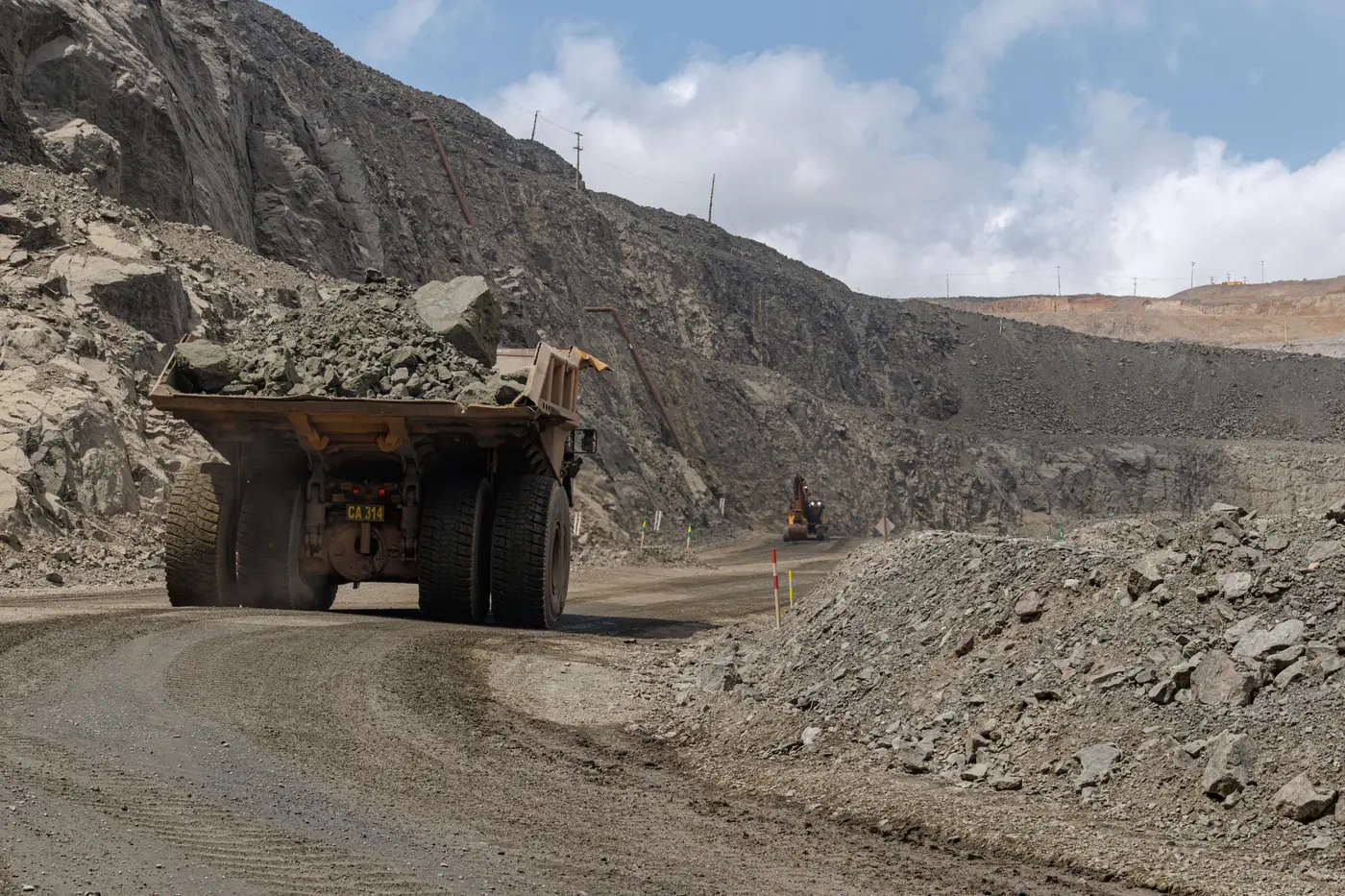
Most sites don't pick one and stick with it. You run water trucks on the primary haul road because the fleet's already there, then switch a low-traffic access road to magnesium chloride because nobody wants to run a truck down it twice a shift. The decision usually comes down to cycle time, climate, and how much grading the road gets anyway.
Water truck cycle time: the math nobody puts in the budget
A water truck's job is simple and its limits are too. It wets the surface, the surface dries, dust starts again. In hot, dry, windy conditions that window can be under an hour on a heavily hauled road. Run the numbers on cycle time: tank size, fill point distance, haul road length, number of trucks, and you often land on a gap between applications that the plume walks right through, especially on the back half of a shift when a truck's doing double duty on a road that needed watering an hour ago.
Add headcount and equipment cost and water trucking starts to look less like a fix and more like a maintenance schedule you're always slightly behind on. It works. It just works for as long as the water's wet, and on a 12-hour shift with one truck and three miles of haul road, that's not very long.
Magnesium chloride and lignin sulfonate: what actually changes on the road
Magnesium chloride is hygroscopic. It pulls moisture out of the air and holds it in the road surface, so it keeps working between applications instead of drying out the way plain water does. That's the appeal on roads that don't get graded often. The tradeoffs are real too: it's corrosive to equipment and rebar over time, it needs a dry window to cure before traffic runs on it, and in a wet climate it can leach out faster than the brochure suggests.
Lignin sulfonate works differently. It's a pulp-industry byproduct that binds fine particles together rather than just wetting them, and it tends to perform better on roads that get regular haul traffic to work it into the surface. It washes out in heavy rain and needs reapplication after a hard storm, but between applications it doesn't need the constant truck cycle that water does.
Neither one is a set-and-forget treatment. Both need a maintenance plan: reapplication intervals, grading coordination so you're not plowing the treated layer back into the ditch, and a weather eye, because applying either product right before a storm front is money down the drain.
Either way, the regulator still asks where the dust came from
Here's the part that doesn't change no matter which suppressant you pick. A complaint comes in, or a fenceline monitor trips, and someone asks which source it was: the haul road, the crusher, or the stockpile. If your only answer is a field log and a ground observer's best guess, you're negotiating from a weaker position than you need to be, even if your suppression program is solid.
An image-based record of where a plume extended on the day in question does more for that conversation than another entry in the compliance log. That's the gap Fugitive Dust Map is built to close: a marked-up image and a shapefile of plume extent from a single satellite pass, pulled after an event or complaint, so EHS teams can point to the source instead of describing it.
Picking between water trucks and chemical treatment is a maintenance decision. Proving where the dust came from is a different problem, and it's the one that costs you in a regulator meeting, not a budget line. If you're building the case for where suppression spend should go next, that's worth a look.