Blog/ 2026-11-23
What ground sample distance do you need to see a haul road dust plume?
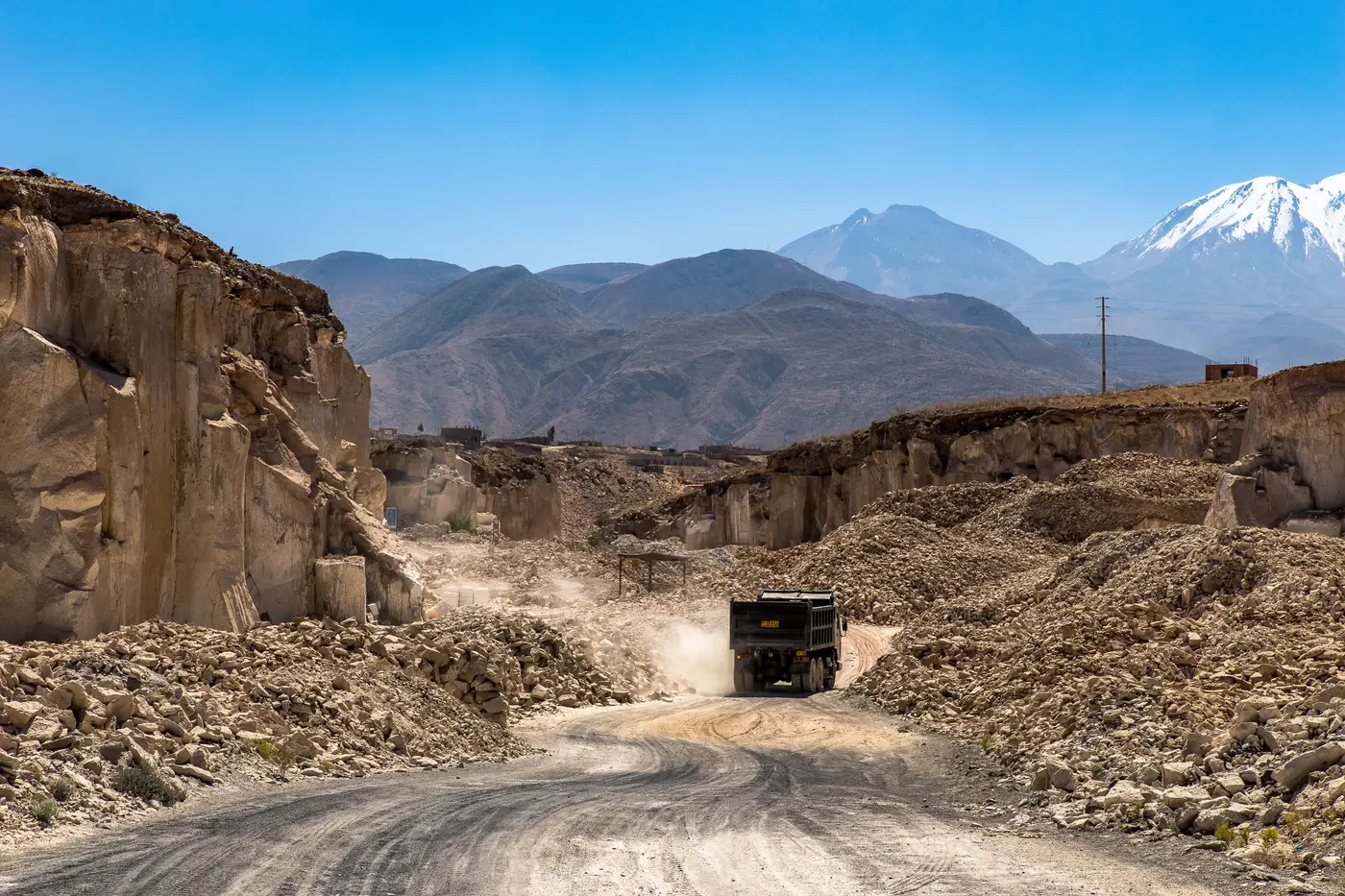
Ground sample distance is the thing people ask about first and understand least. You hear "sub-meter" thrown around in a sales call and nod along, but the number that matters is simpler: can the pixel resolve the edge of the plume against the background, or does it just smear everything into one gray patch?
For fugitive dust work, the short answer is 0.5 to 2 meters GSD, with the low end of that range doing the real work when the plume is thin, fresh, or sitting over a haul road that's already the same color as the dust on it.
What GSD buys you
At 2 m GSD, a dust plume off a stockpile or a loaded haul truck shows up fine if the plume is wide and dense, the kind of event that's already visible from the highway. What you lose at 2 m is the edge. A plume that's dissipated to a thin haze, or one running along a haul road that's unpaved and the same tan-gray as the dust itself, gets swallowed into the background. You can tell something happened. You often can't draw a clean line around where it stopped.
At 0.5 m, that edge sharpens up. You can trace the plume boundary against the road surface, separate it from truck shadow, and in a lot of cases follow it far enough downwind to see where it crossed a haul road into a buffer zone or toward a property line. That's the difference between "a plume was observed near the crusher" and a shapefile you can hand to a regulator with coordinates on it.
The crusher and stockpile case is a bit more forgiving than the haul road case, because crusher dust tends to be denser and the background (processing pad, concrete, cleared ground) contrasts more with the plume than a dirt haul road does. Haul roads are the hard case precisely because road and dust are often the same material.
0.5 m vs 2 m: what changes in practice
Think about what you're trying to produce out of the image. If the deliverable is "yes, there was visible dust in this area on this date," 2 m gets you there most of the time for a reasonably sized event. If the deliverable is a marked-up extent you can overlay on a mine plan, measure a buffer distance from, or put in front of someone who's going to push back on it, 0.5 m is where the plume stops being a smudge and starts being a shape with edges you'd defend.
There's a middle ground worth naming: 1 m GSD often handles the stockpile and crusher cases acceptably, because those plumes tend to be more concentrated and closer to the source. It's the long, thin, road-following plume that punishes anything coarser than 1 m, because the whole feature might only be a few pixels wide to begin with at 2 m.
One thing GSD alone doesn't fix is timing. A high-resolution pass over a dust event that happened two days ago and already settled gives you a clean image of nothing. Resolution tells you how sharp the plume will be if the satellite catches it. It doesn't control whether it catches it at all, which is a separate conversation about tasking and revisit, not optics.
Why this matters for the evidence, not just the picture
None of this is really about the image looking good. It's about whether the extent you draw around a plume holds up when a regulator, or your own corporate EHS team, asks where that line came from. A ground observer's note in a log says "dust visible from the east pit road around 2pm." A shapefile at sub-2-meter resolution says where the plume boundary sat relative to the haul road, the stockpile, and the nearest sensitive receptor, on a specific pass, on a specific date.
That's the gap Fugitive Dust Map is built to close: a single satellite pass over the site after an event or complaint, segmented into a marked-up image and a shapefile of plume extent, at the GSD that resolves a haul road plume instead of flattening it into background.
If you've got a complaint on file and nothing but a log entry to back it up, it's worth finding out what a single pass over that road would actually show.