Blog/ 2026-10-13
What is EPA Method 9, and why mine EHS teams still rely on it
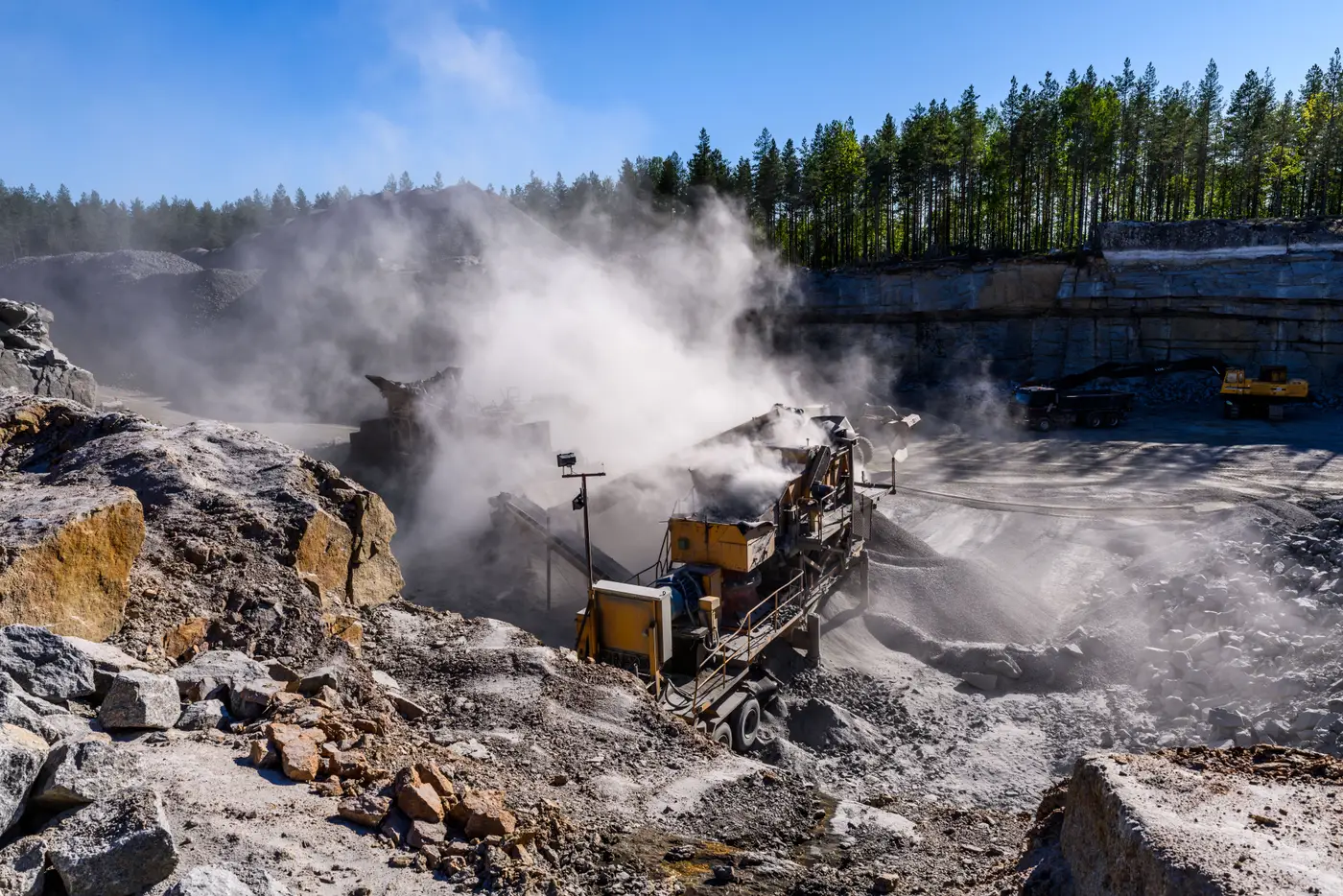
EPA Method 9 is the reference test for determining the opacity of visible emissions by eye. A trained, certified observer stands at a prescribed distance and angle from a plume, reads opacity in 15-second intervals over a six-minute period, and records it on a standard field data sheet. It comes out of 40 CFR Part 60, Appendix A, and it's still the method most state and federal fugitive dust permits write into their compliance language.
If you run a quarry, a crusher pad, or a haul road at a surface mine, your air permit probably caps visible emissions at 20% opacity, give or take, and the Method 9 reading is the legal yardstick for that cap. When an inspector shows up with a stopwatch, this is the test they're running.
How a Method 9 reading works
Getting certified means a day of training and passing a smoke-generator test, and that certification has to be kept current, usually every six months. In the field, the observer positions with the sun generally behind them, sights the plume against a contrasting background, and estimates opacity in 5% increments every 15 seconds for 24 consecutive readings. Those 24 readings average out to the six-minute opacity value that lands in your compliance file.
It's simple by design. That's also its limit. One person, one vantage point, deciding what percentage of light a plume is blocking, on a day when wind direction shifted twice and the crusher ran two different ore lots.
Why it's still the test regulators trust
Method 9 remains the only legally recognized visible emissions test for most fugitive dust rules. Inspectors train on it every year, and a certified reading carries real weight in an enforcement record regardless of what else you can produce. No EHS team is replacing it, and none of this is an argument for trying.
The gap shows up after the fact. A complaint comes in from a resident three ridgelines over. If an inspector was on site, their reading covered six minutes, one angle, one day. If one wasn't, your own log entry says something like "haul road, moderate dust, wind out of the northwest." Neither one tells you whether the plume came off your stockpile, the gravel operation next door, or the earthwork two miles down the valley, and neither gives you a record of how far it traveled before the same complaint lands on your desk again.
The observer did exactly what the method asks: captured opacity at one point, for one six-minute window, with no requirement to track where the plume traveled across the site afterward.
Where imagery fits around the reading
Mine EHS teams are increasingly pairing the certified observer's opacity reading with something that covers the ground-truth question Method 9 was never designed for: where did this plume actually sit, and how far did it spread. Fugitive Dust Map takes a single satellite pass over the site, segments the visible dust plume off the haul road, crusher, or stockpile it came from, and hands back a marked-up image with a shapefile of plume extent, the kind of thing you can set next to the Method 9 log when a complaint or an inspection asks you to show your work.
None of that replaces the observer. The six-minute reading is still the regulatory test, and it will stay that way. But when a complaint names your site as the source and your log tells a different story, an image showing plume extent for that day changes the conversation with the inspector.
What to keep on file beyond the Method 9 log
If your site already runs Method 9 observations, the useful question isn't whether to keep doing them. It's what you have on record for the hours nobody was standing at the fence line with a stopwatch, which is most of them.
If a complaint has you reaching for more than a log entry, see what a marked-up plume image for your own site looks like.